From the service bench
Most of what lands on our bench was preventable.
A pressure washer is a simple machine until you neglect it, and then it is an expensive one. Almost everything our techs see could have been caught with a five minute check before the job started. Here is what we tell customers who ask what they should actually be doing, and how to think about buying the right machine in the first place.
Every time you use it
Before and after every use, not just when it acts up.
Inspect and clean
Look over the whole machine and every accessory, hoses, wand, trigger gun, before you switch it on, and again before you put it away. Wipe it down and store it clean. Dirt and grit left on a machine is what ends up inside the pump next time you run it, and the wrong detergent can gum up a pump just as fast as a skipped oil change.
O-rings and screens
O-rings and inlet screens wear out quietly and give you almost no warning. Check them and swap them before they fail, not after. A two dollar O-ring is a lot cheaper than what a failed seal does to the pump behind it.
Wand and trigger
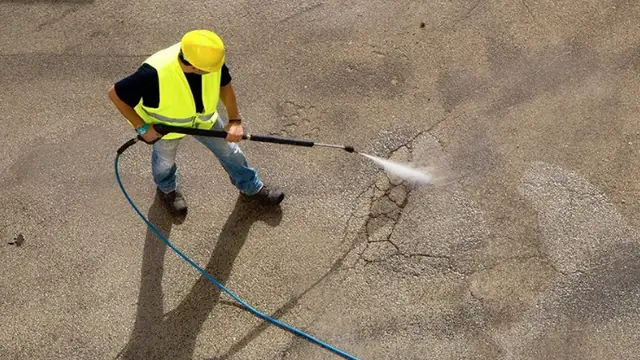
Check the spray wand and trigger gun for cracks, wear or a loose connection before you pull the trigger. That wand is holding back real pressure, and finding a problem with it mid-job is the wrong time to find out.
Why it's worth the five minutes
A machine that gets checked keeps working. One that doesn't, quits on you mid-job.
None of this is complicated. It's the same handful of checks every time, and it's the difference between a machine that runs for years and one that sits on our bench waiting on a part we have to order in.
The two parts that actually fail
The pump and the engine.
Water pump
Purge the pump after each use. Change the oil every 50 hours of run time or once a year, whichever comes first. And if it's going below freezing, winterize it. Don't wait for a hard freeze to catch you with water still sitting inside the pump. That's how a pump cracks overnight, and it's the single most avoidable repair we see.
Engine
Service the engine with manufacturer approved parts. Generic parts can void the warranty and tend to cost more in the long run than what they saved you up front. We stock parts for most of what we sell and rent, and if you'd rather hand it to a tech than do it yourself, we offer tune-up service too.
Book a tune-upBuying or renting
Picking the right machine before you spend anything.
There isn't one correct pressure washer. There's the one that fits the job in front of you. Four questions get you most of the way there.
Hot water or cold water
Cold water handles general dirt and grime just fine. Hot water cuts through grease, oil and baked-on grime much faster, which is why it earns its keep in automotive, food service and heavy industrial work.
Electric or gas and diesel
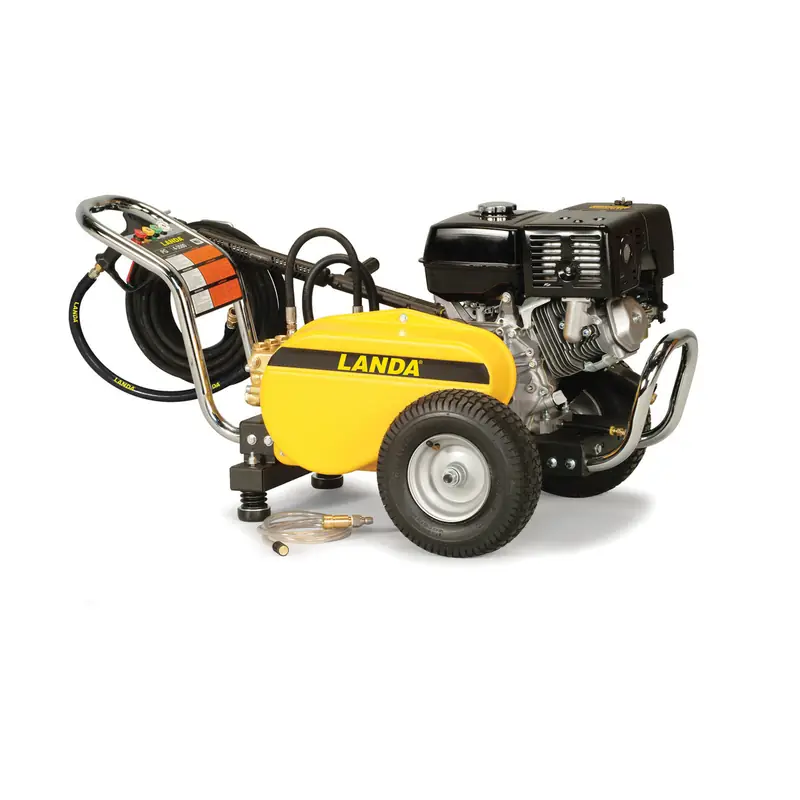
Electric runs quieter and is the better call indoors or anywhere exhaust is a problem. Gas and diesel trade that for portability and power without needing an outlet nearby.
Portable or stationary
A portable machine goes wherever the job is. A stationary unit gets plumbed in once and stays put, usually the right call once washing becomes a daily routine rather than an occasional job.
Belt driven or direct drive
A belt driven pump turns slower than the engine and generally outlasts a direct drive unit under heavy commercial use. A direct drive machine is lighter and costs less up front, but works harder over its lifetime.
Going hot water
If you're heating water, pick your heat source too.
Hot water units still need to decide how they make the heat, and that choice is worth thinking through before you buy.
- Fuel oil or diesel
- Burns hot and works anywhere, no gas line required. Common on trailer and mobile units for exactly that reason.
- Electric heat
- Clean and quiet, and the right call where you've already got the power and don't want a burner to maintain.
- Natural gas
- If there's already a gas line to the building, it's usually the cheapest option to run on a stationary hot water unit.
Not sure which machine is right for the job?
Tell the counter what you're cleaning, how dirty it gets and how often you'll run it. That's enough for us to point you at the right machine instead of the most expensive one on the floor.