Hot Water or Cold Water: Picking the Right Pressure Washer for the Job
The question we get asked more than any other, answered honestly instead of sold.
September 10, 2026 · 3 min read
Walk up to the counter and ask about a pressure washer, and the first question we ask back isn't how many PSI you're after. It's what you're cleaning. That answer settles hot or cold before PSI ever enters the conversation, and getting it backwards is the most expensive mistake we watch people make.
Cold water handles dirt, mud, and loose debris just fine
Cold water pressure washers move dirt, mud, dust, and general grime with water pressure alone, no heat required. Sidewalks, siding, fences, parking lots, most equipment exteriors, cold water clears all of it. There's no heating element to run and no fuel or electricity spent warming the water, so the machine itself costs less to buy and less to operate over a season. If what's on the surface isn't greasy, cold water does the same job a hot unit would do for meaningfully less money.
Grease and oil are a different problem
Grease and oil don't rinse off with cold water, they get pushed around. Blast an engine bay or a fleet undercarriage with a cold water washer and you'll move the grease from one spot to another instead of removing it. Heat is what breaks the bond between grease and the metal or concrete it's sitting on, so it actually lifts and rinses clear instead of smearing. Auto shops, fleet maintenance bays, kitchen exhaust hoods, anywhere oil and grease build up on a surface, that's a hot water job every time.
How the heat gets made, and what it costs to run
- Electric heating elements: clean, quiet, no exhaust to worry about, a good fit for indoor or enclosed shop use
- Gas-fired heating, including natural gas hookups on stationary units: faster heat recovery, common on higher-volume shop setups
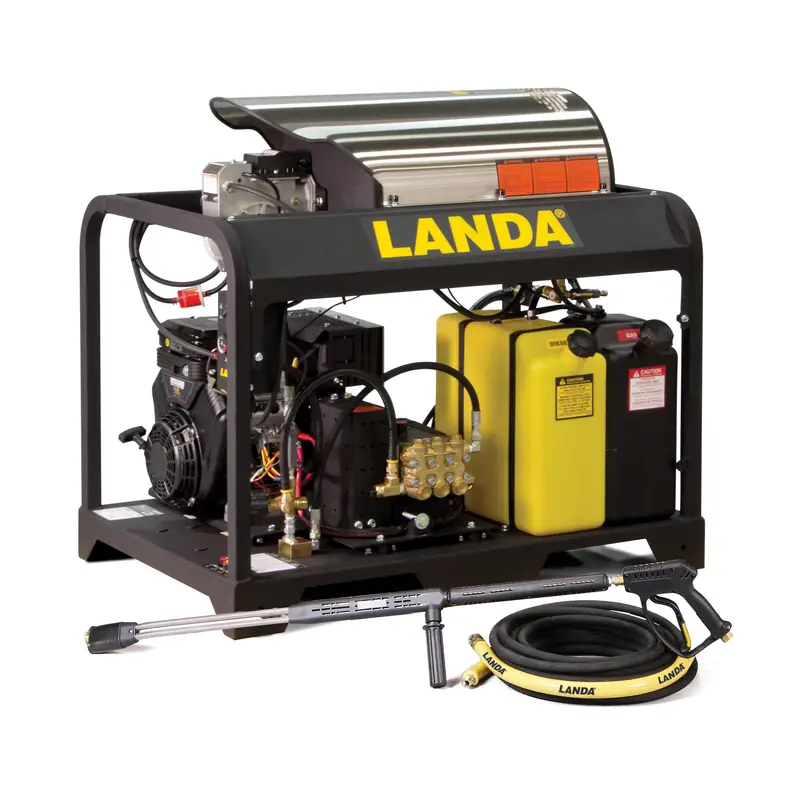
- Diesel or fuel-oil fired units: the standard on trailer and skid mounted rigs that need to run all day out in the field
Whichever heat source you pick, a hot water unit costs more upfront than a comparable cold water machine, and it costs more to run because you're paying to heat the water on top of running the pump. That's real, ongoing money, so the actual question isn't which one is better. It's whether the time and chemical you save on grease jobs adds up to more than what the extra heat costs you.
What we actually stock on each side
Our new equipment lineup splits the same way. On the hot water side there's electric, gas, and natural gas hot water pressure washers, so you're picking based on where the machine lives and what it hooks up to, not just how hot it runs. On the cold water side there's a similar spread, from smaller electric units up through gas-powered machines built for heavier commercial use. Neither side is one-size-fits-all, and that's on purpose, because the job dictates the machine, not the other way around.
When the extra cost is worth it, and when it isn't
If grease and oil are a regular part of what you clean, a hot water unit earns its keep fast. It cuts the time spent on each job and it cuts how much detergent you burn through, because you're not fighting baked-on grease with chemistry alone. If your work is mostly dirt, mud, and everyday exterior grime, a hot water unit is money spent on capability you won't use. Cold water does that job just as well and leaves more in your pocket at the end of the year.
Almost everything we carry new, on both the hot and cold water side, is ETL certified, so the certification question is already answered before you even get into hot versus cold. That leaves the actual decision where it belongs: what's on the surface you're cleaning, and how much that surface changes from job to job.
Not sure which side of the line your work falls on
Tell us the job, not just a spec you saw online. What you're cleaning, how often, and where it happens tells us more than a PSI number ever will, and we'll give you a straight answer on hot or cold before we talk about anything else. We carry both across what we sell new and what's in the rental fleet, so you can rent a unit and try it on the actual job before you commit to buying. Come by the shop in Farmington Hills, call (248) 615-4400, or come and look at what's on the floor and what's out on the rental line.
Atomic Cleaning Systems, (248) 615-4400
Call (248) 615-4400More articles
PSI and GPM Explained: Why Buying on PSI Alone Is a Mistake
Two numbers on every spec sheet, and most buyers only ever look at one of them.
Rent or Buy: An Honest Way to Decide on Pressure Washing Equipment
The question isn't which is cheaper up front. It's how often the machine is actually going to run.